Salt Lake City Emerges As MLB Expansion Front-Runner With Stadium Plan Already Underway
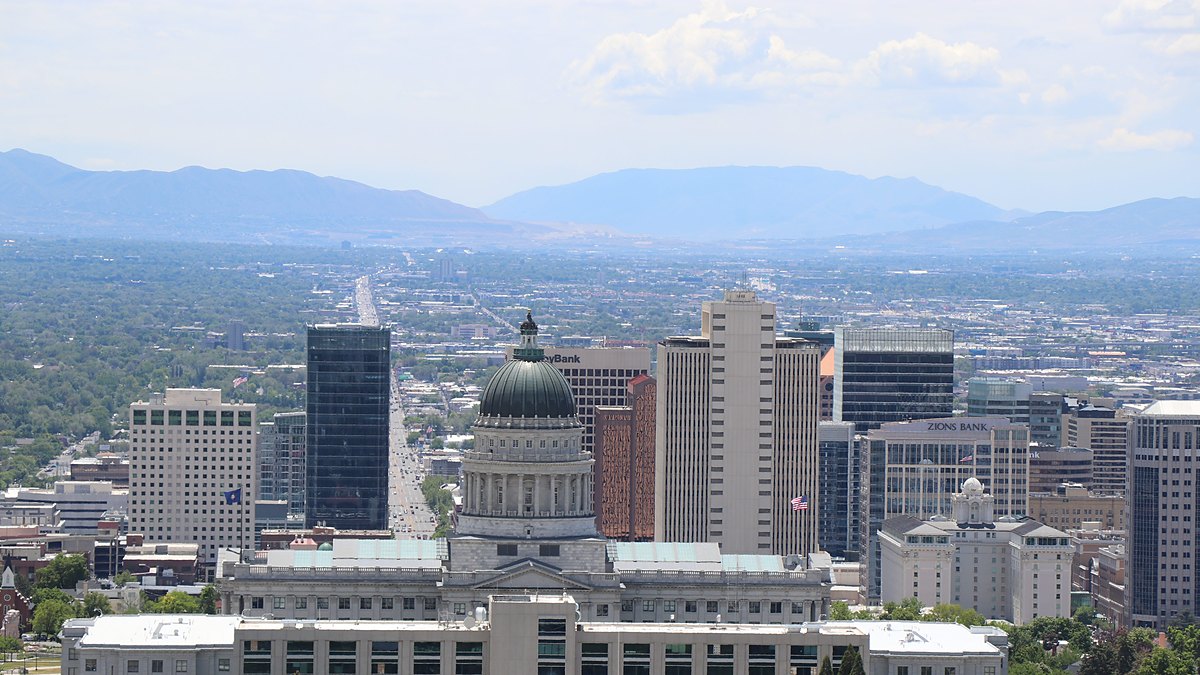
NEW YORK — Salt Lake City has an ownership group, stadium funding, and a construction site already in the ground. None of the five other cities under consideration for Major League Baseball expansion has all three, ESPN’s Jeff Passan reported Tuesday.
Passan surveyed the bids in Salt Lake City, Nashville, Raleigh, Portland, Orlando, and Montreal. He interviewed a representative of each group. Commissioner Rob Manfred wants one West Coast city and one East Coast city chosen before his planned retirement in January 2029. Salt Lake City is the front-runner for the West.
The Larry H. Miller Company owns the Salt Lake City bid, which runs under the name Big League Utah. Ownership has pledged $3.5 billion for a 100-acre multiuse development, with $900 million in state funding intended to cover half the cost of the ballpark itself. Work has already started at the site, the Power District, on the city’s west side. Salt Lake City’s media market ranks 28th. Its combined statistical area was 2,705,693 in the 2020 Census.
Utah Gov. Spencer Cox sits on the Big League Utah advisory board. Cox said the sponsorship money, the box seats, and the overall spending around the Utah Jazz run on par with a larger market, and that Utah has proved the same point with the Utah Mammoth.
“I know it’s why the league is looking very seriously at us,” Cox told ESPN.
Since 2016, Manfred has deflected expansion questions by pointing to the unresolved stadium situations for the Tampa Bay Rays and the Athletics. The Athletics are close to their move to Las Vegas. As of Aug. 28, the Rays have a funded ballpark in Tampa.
The Hillsborough County Commission voted 5-2 that day to approve a county share capped at $796 million. Tampa’s City Council had voted 4-3 the day before to put in $80 million. The ballpark anchors a $2.3 billion development on Hillsborough College’s Dale Mabry campus, and the Rays are covering more than $1.3 billion of it plus all cost overruns. Hillsborough County will own the stadium. The Rays will pay $4 million a year in rent on an initial 35-year use agreement. Construction is timed for the ballpark to open in 2029.
That leaves the collective bargaining agreement as the last item ahead of expansion on the league’s order of business. MLB has not opened an expansion process in more than three decades.
Where the Five Other Expansion Bids Stand
Music City Baseball has spent years building the Nashville Stars brand. What the group has not built is an ownership structure, and it has no public financing or site either. Nashville Mayor Freddie O’Connell has said on multiple occasions that he expects a privately funded stadium. Sen. Marsha Blackburn, the overwhelming favorite to win Tennessee’s governorship in November, does not count expansion baseball among her priorities, a source told Passan. Several current MLB owners have questioned in recent months whether Nashville can assemble the pieces in time.
John Loar, the managing partner of Music City Baseball, said nothing gets settled until the league opens a process and looks at every market.
“Major League Baseball and its owners will pick our general partner,” Loar told ESPN.
The Raleigh bid has an owner, and it is the only other one that does. Carolina Hurricanes and Portland Trail Blazers owner Tom Dundon has pledged support for bringing baseball to the city. Former Milwaukee Bucks owner Marc Lasry has expressed interest as well. The North Carolina state house declined to provide $500 million for a stadium, though multiple politicians left open the idea of revisiting the earmark. Dundon holds development rights for 80 acres around Lenovo Center, the Hurricanes’ arena. By the time an expansion team arrives, North Carolina projects to be the seventh-largest state by population. It carries three top-50 markets in Raleigh, Charlotte, and Greensboro.
Lou Pascucci of MLB Raleigh said the money is ready and the owner is ready, and that thousands of people in the community have worked on the bid.
“The heavy lifting in Raleigh has already been done,” Pascucci told ESPN.
Portland has the funding and the site. Oregon Gov. Tina Kotek signed a bill in June 2025 that earmarks up to $800 million for a ballpark in the city. The Portland Diamond Project has signed a letter of intent to buy Zidell Yards, a 33-acre parcel on the banks of the Willamette River. Former Nike executive Craig Cheek leads the group. What Portland does not have is an anchor investor. Its combined statistical area is 3,280,736, and its media market ranks 23rd.
Cheek said the Trail Blazers ran the longest sellout streak, and that the appetite for sports in the area is insatiable.
“We call ourselves Sportland, not Portland,” Cheek told ESPN.
Orlando has proposed a 35.5-acre site near SeaWorld, southwest of the city, for a ballpark designed by Populous. The Orange County Tourist Development Tax Citizen Advisory Task Force denied the Dreamers’ request for $975 million. Rick Workman had been an anchor investor before leaving to join the Rays’ new ownership consortium. Orlando’s media market ranks 15th. Its combined statistical area is 4,197,095. Neither the Rays nor the Miami Marlins have averaged 18,000 in attendance for nearly a decade.
Jim Schnorf, the co-founder and chief operating officer of the Orlando Dreamers, said the 80 million-plus tourists who come through the city make it its own market, and that proximity to another franchise is an advantage going forward rather than a detriment.
“California had five teams with a substantively lesser population than Florida has today,” Schnorf told ESPN.
Montreal has no owner, no funding, and no site. Ashkan Karbasfrooshan, who owns WatchMojo, leads the push there under the name the Peanut Project. He is gathering stakeholders rather than putting up the money himself. Multiple ownership-level sources told Passan that Montreal is worth monitoring on demographics and baseball history alone. The city’s combined statistical area is 4,291,732. In Canada it is the second-largest media market. The Montreal Expos left after the 2004 season.
“Montreal is the most normal candidate for MLB with Salt Lake,” Karbasfrooshan told ESPN.
Rob Manfred Has Tied Expansion to Geographic Realignment
Manfred said on WFAN’s “The Carton Show” on Jan. 8 that he would like the league at 32 teams and would use geographic lines to redraw the divisions, with each league splitting its 16 teams into four of them. He said MLB would try to keep the two-team cities of New York, Chicago, and Los Angeles separated.
On ESPN’s “Sunday Night Baseball” on Aug. 17, 2025, Manfred said expansion would give the league a chance to realign geographically and cut travel wear on players.
The Texas Rangers have played in the American League West in every season since the franchise moved from Washington in 1972. The last expansion, in 1998, moved the Milwaukee Brewers from the AL Central to the National League Central. It moved the Detroit Tigers from the AL East to the AL Central. Arizona and Tampa Bay began play that year.
An expansion fee is expected in the $2.5 billion range. The Los Angeles Angels sold for $4 billion, the San Diego Padres for $3.9 billion. Passan wrote that the two new teams may not be on the field until perhaps 2032.
The current collective bargaining agreement expires at 10:59 p.m. CT on Dec. 1.