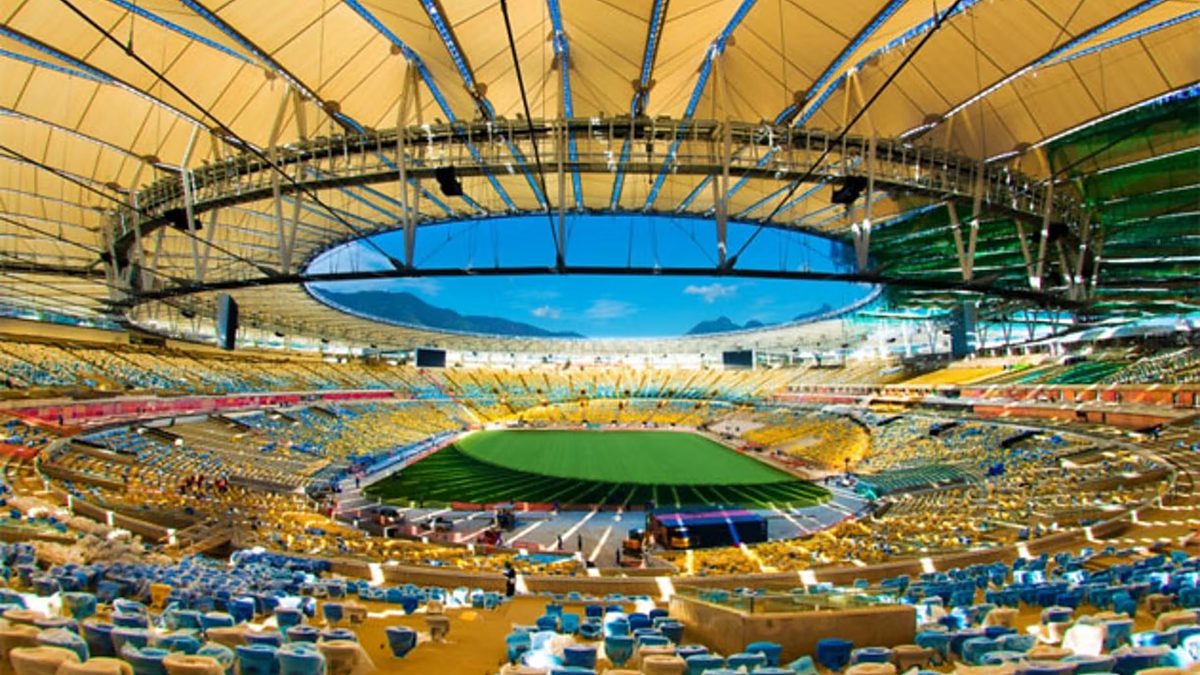
Pappas spoke on the field during the Cowboys’ walkthrough at the stadium Saturday afternoon, Joseph Hoyt of The Dallas Morning News reported. It was the first time Dallas players and coaches saw the grass in person. There was no practice, and some of the people who walked the surface said patches were evident, Hoyt reported.
Pappas said the league had brought the NFLPA its plan for how it was fighting the weather and improving the field.
“Again, things check out,” Pappas said. “We’ve made additional improvements to the field that we think were just helpful, all around helpful.”
Dallas is the designated home team at Maracanã, and kickoff is set for 3:25 p.m. CT Sunday on CBS. Both teams are 1-1.
JC Tretter, NFLPA Pushed For Stitching Before Nick Pappas Update
On Friday, hours after both teams arrived in Brazil, NFLPA executive director JC Tretter released a statement on the field. The union had a player director and third-party field experts at the stadium for days before the Cowboys and Ravens landed.
“Based on our experts’ assessment, the field needed better traction and stability,” Tretter said in the statement. “They recommended reinforced stitching to help the surface hold together and brought in equipment to reinforce as much of the field as possible before the game. Our experts will remain engaged and continue evaluating conditions through kickoff.”
In the same statement, Tretter separated playability from injury risk.
“The concern heading into this week was that the field would be loose, patchy, and lead to excessive slipping,” Tretter said. “Those conditions are generally more of a playability and performance issue than a significant injury concern.”
Pappas said the league brought in GrassMaster stitching machines, which drive synthetic fibers into the ground. The NFL used the same process last year in São Paulo, Pappas said. Maracanã’s account on X also posted that the field was receiving fiber from a GrassMaster stitch machine.
Nick Pappas Points To Spring Bermuda Grass And Rain In Rio
Pappas said the timing of the game has made the field harder to manage. It is spring in the Southern Hemisphere, and the Bermuda grass at Maracanã is coming out of its overseeded winter rye.
“Anyone who manages Bermuda grass back home knows when we come out of winter into spring, we’re getting rid of that overseeded rye grass and going back to pure standard Bermuda. That Bermuda is slow to wake up sometimes,” Pappas said. “That is where we’re at today.”
Maracanã hosts an average of two games a week, Pappas said. Rio has also had more rain than usual over the past two months because of El Niño. The NFL brought tarps to the stadium, which Maracanã does not normally have. They could go on the field Sunday if it rains before kickoff.
The complaints about the grass started with Flamengo, the Brazilian club that plays its home matches at Maracanã. On Saturday, Pappas said the patches might not be as big a concern for the NFL as they are for soccer players.
“Soccer is very focused on ball-surface interaction,” Pappas said. “They want a soccer ball to roll like a billiards table. They want a true roll. They don’t want it to kick or jump one way or another.
“We’re focused on athlete-surface interaction,” Pappas continued.
On Monday at The Star, Cowboys coach Brian Schottenheimer said the league had people at the stadium and had told Dallas the field would be fine. He said the Cowboys had no concerns.
“No concerns,” Schottenheimer said. “The NFL has people down there. They said we’re going to be fine. So I have zero concerns about it. So we look forward to the trip. Everything that we’re hearing from the league sounds like it’s great.”
Schottenheimer also said Dallas would not force any player into a particular cleat. The Cowboys brought several options to Rio, including cleats with seven studs.
After Rio, Dallas plays the Houston Texans in Week 4 on Oct. 4.